

Introduction
If we think of an RO system as a water treatment plant, the membrane is the beating heart of that plant. This thin and delicate component is responsible for separating salts and contaminants from water, and the final water quality depends on its performance.
What Is an RO Membrane?
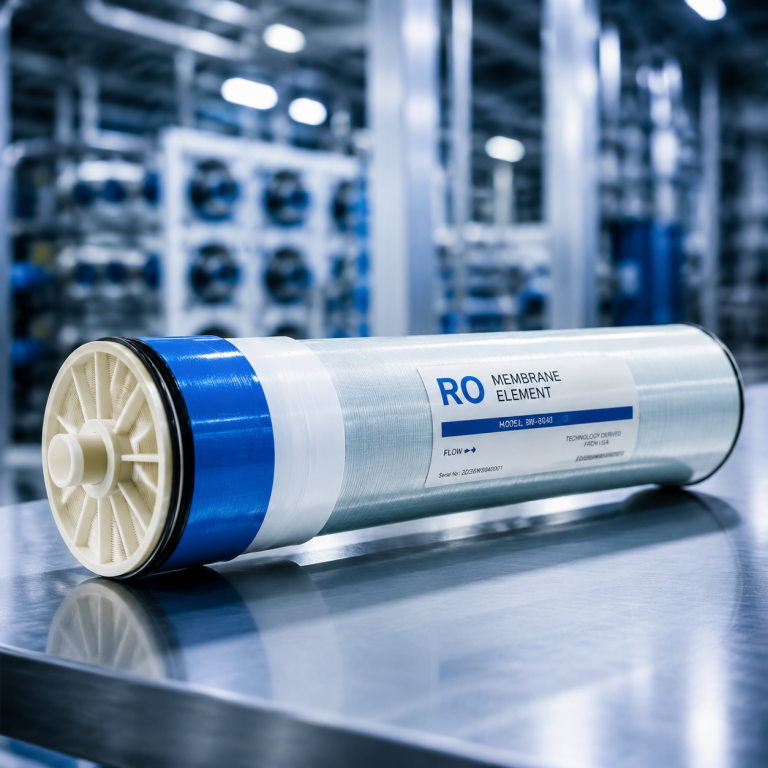
A membrane is a layered semi-permeable barrier, usually made of polyamide. Its surface contains extremely fine pores that allow only water molecules to pass through while retaining larger ions, salts, bacteria, and viruses.
Spiral-Wound Membrane Structure
In industrial systems, the membrane is wound in a spiral shape around a central tube. Pressurized water passes through the edges of this membrane, and the treated water is collected from the center.
How the Membrane Works
- Pre-treated water is forced against the membrane surface under high pressure.
- A portion of the water passes through the membrane pores and is called permeate.
- Salts and impurities remain on the membrane surface and exit with the concentrate flow.
- This process continues until the desired water quality is achieved.
Key Factors in Membrane Selection
- Feed water quality: Water with high TDS requires a membrane with higher pressure tolerance.
- Required capacity: Each membrane is rated by production capacity in cubic meters per day.
- Resistance to chlorine and chemicals
- Brand and authenticity: Using original membranes such as Paya Pala ensures system quality and durability.
Signs of Membrane Fouling or the Need for Cleaning
- Reduced permeate production
- Abnormal pressure drop
- Increased TDS in treated water
- Higher energy consumption
Conclusion
The RO membrane determines the quality and efficiency of the water purification system. Choosing a genuine membrane and maintaining it properly means long-term savings in operating costs.
Contact us to inquire about models and pricing.

No comments yet.